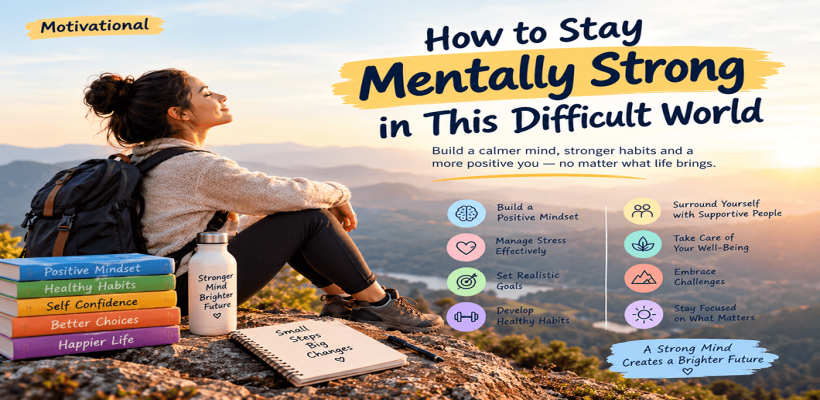
How to Stay Mentally Strong in a Difficult World
Life does not always go according to plan. Unexpected challenges, personal disappointments, financial pressure, relationship problems, and uncertainty about the future can make even ordinary days feel difficult. In a world that often demands constant productivity and quick solutions, protecting your emotional well-being has become an important part of living a balanced life.
Staying mentally strong does not mean ignoring your emotions, pretending that everything is fine, or handling every problem alone. True mental strength means learning how to face challenges, respond thoughtfully to difficult situations, recover from setbacks, and continue moving forward without losing sight of what matters to you.
The good news is that mental resilience can be developed through everyday practices. By building healthier habits, changing unhelpful thought patterns, setting boundaries, and learning when to seek support, you can become better prepared to navigate life's ups and downs.
Here are 15 practical and motivational tips to help you stay mentally strong in a difficult world.
1. Accept That You Cannot Control Everything
One of the most important steps toward mental strength is understanding the difference between what you can control and what you cannot. You cannot control every person's opinion, every unexpected event, or every outcome. Trying to control everything can leave you feeling exhausted and frustrated.
Instead, direct your attention toward your own choices, actions, and responses. You may not be able to prevent every problem, but you can often decide how to approach it, what support to seek, and what action to take next.
When something difficult happens, ask yourself two questions: What is within my control, and what must I learn to accept? This simple distinction can help you spend less energy worrying about the uncontrollable and more energy making useful decisions.
Acceptance does not mean giving up. It means recognizing reality clearly so that you can respond to it more effectively.
2. Develop a Positive but Realistic Mindset
Your thoughts influence how you interpret experiences and respond to challenges. If you automatically expect the worst, you may overlook opportunities or feel discouraged before taking action.
A positive mindset does not require you to pretend that problems do not exist. Instead, it encourages you to recognize difficulties while remaining open to possible solutions.
For example, rather than thinking, "Everything is going wrong, and nothing will improve," try asking, "What is one thing I can do to make this situation better?" This shift does not magically solve the problem, but it helps you move from helplessness toward constructive action.
Pay attention to your inner dialogue. Speak to yourself with the same patience and understanding that you would offer a good friend. Encouraging self-talk can help you approach setbacks with greater confidence and perspective.
3. Learn to Manage Stress Before It Becomes Overwhelming
Stress is a normal response to demanding situations, but prolonged stress can affect your energy, concentration, sleep, and emotional well-being. Learning to recognize your stress signals can help you respond before pressure becomes overwhelming.
Notice what happens when you feel stressed. You might become irritable, have difficulty concentrating, withdraw from others, or struggle to relax. These signs can remind you to pause and reassess what you need.
Consider practical stress-management strategies such as:
- Taking slow, comfortable breaths for a few moments.
- Going for a short walk or engaging in gentle movement.
- Breaking a large problem into smaller tasks.
- Taking regular breaks from screens and constant notifications.
- Talking with someone you trust about your concerns.
You do not need to eliminate all stress from your life. The goal is to develop healthier ways to manage pressure and recover after demanding experiences.
4. Build Habits That Support Your Well-Being
Mental resilience is easier to maintain when your everyday routine supports your physical and emotional health. Small habits may seem insignificant at first, but consistent care can help you feel more prepared to handle daily challenges.
Start with the basics. Aim for adequate sleep, eat balanced meals, drink enough water, and include regular physical activity that suits your abilities. Make time for relaxation and activities that bring you genuine enjoyment.
Create a routine that is realistic for your circumstances. You do not need an elaborate morning ritual or a perfectly organized schedule. A few sustainable habits are more useful than an ambitious routine that leaves you feeling pressured.
Remember that healthy habits are a foundation for well-being, not a guarantee that you will never experience difficult emotions. Give yourself flexibility when life becomes demanding.
5. Stop Comparing Your Journey With Other People
Constant comparison can undermine your confidence and make you feel as though you are falling behind. You might compare your career, relationships, appearance, finances, or achievements with what other people share online.
However, you rarely see the complete story behind another person's life. People have different opportunities, responsibilities, resources, and challenges. Comparing your entire journey with someone else's carefully selected moments creates an unfair standard.
Instead, measure progress against your own values and previous experiences. Ask yourself whether you are learning, making healthier decisions, and taking steps toward the life you want to create.
If social media consistently makes you feel inadequate, consider limiting your exposure or choosing accounts that encourage realistic growth and healthy perspectives.
Your progress does not have to look impressive to everyone else to be meaningful. Build a life that makes sense for you.
6. Strengthen Your Ability to Handle Setbacks
Everyone experiences disappointment at some point. Plans fail, opportunities disappear, relationships change, and efforts do not always produce the expected results.
Resilience is not about avoiding disappointment. It is about learning to recover, adapt, and decide what to do next.
When you experience a setback, give yourself permission to acknowledge your feelings. You do not have to rush into positive thinking or pretend that the situation does not hurt.
When you are ready, reflect on what happened. Identify what you can learn, what you might change, and what was outside your control. Then choose a realistic next step.
A setback may require you to change your strategy or adjust your expectations. It does not automatically mean that you have failed as a person. Every difficult experience can provide information that helps you make wiser decisions in the future.
7. Set Healthy Boundaries and Protect Your Energy
Trying to please everyone can leave you with little time or energy for your own needs. You may agree to responsibilities you cannot manage, tolerate disrespectful behavior, or feel guilty whenever you say no.
Healthy boundaries help you protect your time, emotional well-being, and personal values. They also make your expectations clearer to the people around you.
You can begin by recognizing situations that repeatedly leave you feeling exhausted or resentful. Consider whether you need to communicate a limit, change an arrangement, or reduce an unnecessary commitment.
For example, you might say, "I would like to help, but I cannot take on another responsibility right now." You can be respectful without agreeing to everything.
Boundaries are not about controlling other people. They are about deciding what you can reasonably accept and how you will respond when your limits are not respected.
8. Focus on Solutions Instead of Replaying Problems
When something goes wrong, it is natural to think about what happened. However, repeatedly replaying the same situation without gaining new understanding can increase frustration and make it harder to move forward.
Try to distinguish between useful reflection and unproductive overthinking. Useful reflection helps you understand a problem and identify possible actions. Overthinking often repeats the same worries without leading to a decision.
When you notice yourself stuck in a cycle of worry, write down the concern. Identify what you know, what you are assuming, and what information you still need.
Next, choose one practical step. You might ask someone for clarification, create a plan, have a necessary conversation, or decide to revisit the issue when you have more information.
Not every problem has an immediate solution. When you cannot act yet, deliberately return your attention to something useful or restorative rather than demanding that your mind solve everything at once.
9. Surround Yourself With Supportive People
Mental strength does not mean being independent of everyone else. Supportive relationships can provide encouragement, perspective, practical help, and a sense of belonging during difficult periods.
Spend time with people who listen respectfully, communicate honestly, and allow you to be yourself. Seek relationships in which support goes both ways and where differences can be discussed without constant judgment.
When you are struggling, try telling a trusted person what you need. You might want someone to listen without offering advice, help you think through a decision, or assist with a practical responsibility.
You can also look for supportive communities, peer groups, or mentors who understand your experiences.
Choose your relationships thoughtfully, but remember that no single person needs to meet every emotional need. Building a range of healthy connections can help you feel more supported and less isolated.
10. Practice Gratitude Without Ignoring Reality
Gratitude can help you notice the positive parts of life that are easy to overlook when you are under pressure. It encourages you to recognize supportive relationships, meaningful experiences, personal strengths, and small moments of comfort.
Try writing down three things you appreciate at the end of the day. They might include a helpful conversation, a meal you enjoyed, a task you completed, or a quiet moment when you could relax.
You can also express appreciation directly to people who have made a difference in your life. A sincere message or simple thank-you can strengthen relationships and encourage a more thoughtful outlook.
Gratitude should not become another obligation or a reason to dismiss your struggles. You can appreciate what is good in your life while still acknowledging grief, frustration, disappointment, or the need for change.
11. Learn to Respond Rather Than React
Strong emotions can make it tempting to respond immediately. During an argument or stressful moment, you might say something hurtful, make a rushed decision, or interpret a situation more negatively than necessary.
Learning to pause can create space between an emotional reaction and your next action.
When you feel overwhelmed, try the following approach:
- Pause before responding if the situation allows it.
- Notice and name the emotion you are experiencing.
- Consider the facts rather than relying only on your first interpretation.
- Think about the likely consequences of different responses.
- Choose a response that reflects your values and long-term interests.
This does not mean suppressing your feelings. It means allowing emotions to provide information without automatically letting them dictate your behavior.
With practice, thoughtful responses can help you handle disagreements more constructively and make decisions you are less likely to regret.
12. Keep Learning and Stay Open to Change
A difficult world often requires us to adapt to changing circumstances. Mental flexibility helps you consider new information, question outdated assumptions, and discover alternative ways to solve problems.
Make learning a regular part of your life. Read useful books, develop practical skills, listen to different perspectives, or ask experienced people how they approach challenges.
Be willing to reconsider a belief when new evidence suggests that your understanding needs to change. Changing your mind after learning something new is not necessarily a weakness; it can be a sign of thoughtful judgment.
When a plan no longer works, consider whether the goal still matters and whether a different strategy could help you reach it.
Adaptability allows you to remain committed to your values while adjusting your approach to changing realities.
13. Build Confidence by Keeping Small Promises to Yourself
Confidence often grows through experience rather than waiting until you feel completely ready. Each time you take a manageable action, practice a skill, or follow through on a commitment, you create evidence that you can rely on yourself.
Start with promises that are realistic. If you want to become more organized, spend five minutes planning your day. If you want to improve your fitness, begin with an activity that fits your current ability. If you want to learn something new, schedule a short study session.
Track your efforts and acknowledge progress. When you miss a commitment, avoid turning one difficult day into a judgment about your entire character. Review what happened and adjust your plan if necessary.
Self-confidence does not require you to know every answer or succeed at everything. It involves developing trust in your ability to learn, make decisions, and respond when things do not go as expected.
14. Accept That Rest Is Part of Strength
There is a common misconception that mentally strong people are always productive, always confident, and never need a break. In reality, everyone has limits, and ignoring those limits can make it harder to maintain a healthy routine.
Rest gives you time to recover from demanding activities and reconnect with what matters outside your responsibilities. It can include adequate sleep, quiet time, enjoyable hobbies, spending time in nature, or connecting with people you care about.
Pay attention to signs that you may need to slow down, such as persistent exhaustion, difficulty concentrating, irritability, or a loss of interest in activities you normally enjoy.
When possible, adjust your workload, ask for help, and make time for recovery. If ongoing emotional or physical difficulties affect your daily life, consider speaking with a qualified professional.
Taking a break does not mean abandoning your goals. It can be a sensible way to support your ability to pursue them over time.
15. Keep Moving Forward With Purpose
During difficult periods, it can be challenging to remember what you are working toward. A sense of purpose can help you identify meaningful priorities and choose actions that reflect your values.
Your purpose does not have to be a single grand ambition. It might involve caring for your family, developing your abilities, contributing to your community, building a meaningful career, or becoming a kinder and more dependable person.
Identify what matters most to you and choose small actions that support those values. If health matters to you, take a step toward a healthier routine. If relationships matter, make time for an honest conversation. If learning matters, dedicate time to developing a skill.
When circumstances change, your plans may need to change too. You can remain connected to your values while finding a different route forward.
Progress does not need to be dramatic every day. Sometimes, moving forward means taking action. At other times, it means asking for support, reconsidering your options, or giving yourself time to recover.
How to Practice Mental Strength Every Day
Developing mental resilience does not require you to change your entire life overnight. Begin with a simple routine that helps you practice a few useful skills consistently.
- In the morning: Identify your priorities and choose one realistic intention for the day.
- During stressful moments: Pause, breathe comfortably, and focus on the next practical step.
- Throughout the day: Take breaks, maintain healthy boundaries, and communicate respectfully.
- In the evening: Reflect on one challenge you handled and one thing you learned.
- Each week: Review your habits, reconnect with supportive people, and adjust commitments that are no longer realistic.
Start with one or two practices that feel manageable. As they become more familiar, you can gradually add others. The goal is to create habits that support you in real life rather than another demanding standard you feel obligated to meet.
Conclusion: Build Inner Strength One Day at a Time
Staying mentally strong in a difficult world is not about becoming emotionless or pretending that life is always fair. It is about learning to face reality, manage your responses, recover from setbacks, and seek support when you need it.
By accepting what you cannot control, developing healthier habits, setting boundaries, maintaining supportive relationships, and focusing on meaningful actions, you can build a stronger foundation for navigating life's challenges.
Remember that progress is rarely a straight line. You may feel confident one day and uncertain the next. You may handle one challenge well and struggle with another. These experiences do not erase the progress you have made.
Be patient with yourself, learn from difficult moments, and keep choosing actions that support your well-being and values. You do not need to solve every problem today or carry every burden alone.
True mental strength is not the absence of struggle. It is the willingness to face challenges with courage, respond with wisdom, and continue moving forward one step at a time.
A Motivational Reminder
You may not be able to choose every challenge that comes your way, but you can work on how you prepare, respond, and recover. Give yourself permission to learn, rest, ask for help, and begin again.
Stay patient. Protect your peace. Trust the process of growth. Even small steps toward a healthier mindset can make a meaningful difference in how you navigate life.


Share Your Thoughts 0